
Lexus ES: Inspection
INSPECTION
PROCEDURE
1. INSPECT ENGINE COOLANT TEMPERATURE SENSOR
CAUTION:
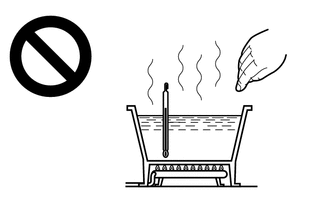
- Do not put your hands into the water that has been heated for the inspection.
- Touching the heated water could result in burns.
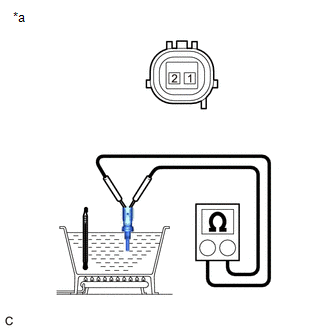
| (a) Measure the resistance according to the value(s) in the table below. Standard Resistance:
NOTICE: If checking the engine coolant temperature sensor in water, be careful not to allow water to contact the terminals. After checking, wipe the water off the engine coolant temperature sensor. If the result is not as specified, replace the engine coolant temperature sensor. |
|
READ NEXT:
 Installation
INSTALLATION PROCEDURE 1. INSTALL ENGINE COOLANT TEMPERATURE SENSOR HINT: Perform "Inspection After Repair" after replacing the engine coolant temperature sensor. Click here (a) Apply a light coat
Components
COMPONENTS ILLUSTRATION *A Type A *B Type B *1 FRONT FLOOR COVER RH - - N*m (kgf*cm, ft.*lbf): Specified torque - - ILLUSTRATION *A Type A *B Type B *1
SEE MORE:
System Voltage Circuit Short to Ground or Open (P056014)
MONITOR DESCRIPTION The auxiliary battery supplies electricity to the ECM even when the power switch is off. This power allows the ECM to store data such as DTC history, Freeze Frame Data and fuel trim values. If the auxiliary battery voltage falls below a minimum level, the memory is cleared and th
Utility
UTILITY OPERATION HISTORY HINT: History of Reason for Operation: The windshield wiper motor assembly stores Operation History which can be read using the Techstream, when a malfunction of the wiper and washer system occurs. Click here (a) Connect the Techstream to the DLC3. (b) Turn the power swit
© 2016-2026 Copyright www.lexguide.net
