
Lexus ES: Diagnosis System
DIAGNOSIS SYSTEM
DIAGNOSIS FUNCTION
(a) The diagnosis function turns off the cruise control indicator, illuminates the master warning light and displays a warning message when a malfunction is detected. When a malfunction is detected in the dynamic radar cruise control system, DTCs are stored in the ECM or forward recognition camera.
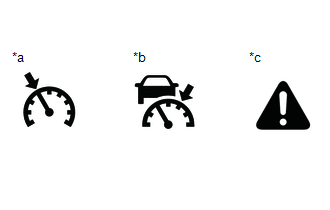
| *a | Cruise Control Indicator (Constant Speed Control Mode) |
| *b | Cruise Control Indicator (Vehicle-to-vehicle Distance Control Mode) |
| *c | Master Warning Light |
NOTICE:
As data stored in the ECU will be cleared, do not remove any fuses or disconnect the cable from the negative (-) battery terminal before the inspection is complete.
HINT:
When the system returns to normal, the warning message "Cruise Control Malfunction Visit Your Dealer" displayed on the multi-information display will be cleared.
READ NEXT:
 Dtc Check / Clear
DTC CHECK / CLEAR NOTICE: When the diagnosis system is changed from normal mode to check mode or vice versa, all DTCs and freeze frame data recorded in normal mode are cleared. Before changing modes,
Freeze Frame Data
FREEZE FRAME DATA CHECK FREEZE FRAME DATA HINT: The ECU records vehicle and driving condition information as freeze frame data the moment a DTC is stored. (a) Connect the Techstream to the DLC3. (b) T
Fail-safe Chart
FAIL-SAFE CHART Automatic Cancel Control (a) When the vehicle is being driven in constant speed control mode and any of the following malfunctions occur, control of vehicle speed by the dynamic cruise
SEE MORE:
Left Rear Wheel Speed Sensor Circuit Voltage Out of Range (C050C1C)
DESCRIPTION Refer to DTC C050C12 Click here DTC No. Detection Item DTC Detection Condition Trouble Area C050C1C Left Rear Wheel Speed Sensor Circuit Voltage Out of Range
When the vehicle is being driven in a straight line at a speed of 20 km/h (12 mph) or more and VSC/TRAC has
Rear Power Window RH does not Operate with Rear Power Window Switch RH
DESCRIPTION When the power switch is on (IG), the power window regulator motor assembly (for rear RH door) is operated by the rear power window regulator switch assembly (for RH door). The power window regulator motor assembly (for rear RH door) has motor, regulator, and ECU functions. WIRING DIAGRA
